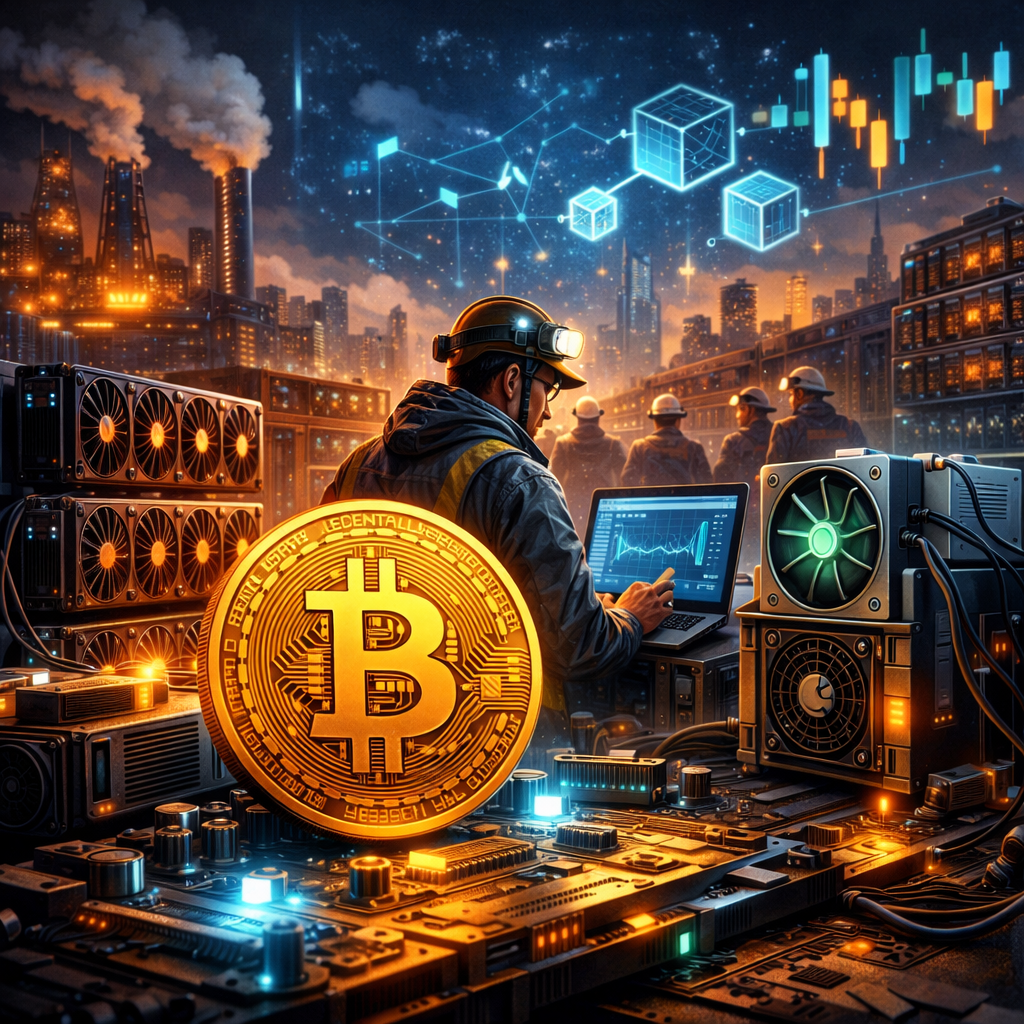
The term crypto mine refers to the process by which new units of cryptocurrency are created and verified, a key mechanism that sustains blockchain networks and ensures transactional integrity. This digital operation has become a critical component in the ecosystem of decentralized finance (DeFi), offering both lucrative opportunities and pressing challenges for individuals, companies, and governments alike.
The Origins of Crypto Mining
To fully grasp the scope and impact of the crypto mine phenomenon, one must trace its roots back to the inception of Bitcoin in 2009. Created by the pseudonymous Satoshi Nakamoto, Bitcoin was the first decentralized currency, relying on a distributed ledger technology known as the blockchain. This ledger required a method to validate transactions without a central authority—thus, mining was born.
Mining is the act of solving complex mathematical problems through computational power. These problems are designed to be resource-intensive, ensuring that each new block added to the blockchain requires a significant expenditure of energy and time. This proof-of-work model discourages fraud and secures the network.
Hardware Evolution in the Crypto Mine Industry
In the early days of cryptocurrency, it was possible to mine coins using a regular home computer. However, the rapid rise in network difficulty and competition led to a massive evolution in hardware.
- CPUs (Central Processing Units): Initially sufficient for mining.
- GPUs (Graphics Processing Units): Became the next step due to parallel processing capabilities.
- FPGAs (Field-Programmable Gate Arrays): Offered more efficient power usage for specific mining tasks.
- ASICs (Application-Specific Integrated Circuits): Represent the pinnacle of mining efficiency today, built specifically for one algorithm (e.g., SHA-256 for Bitcoin).
The transition to specialized hardware brought increased profits for large operations but made it increasingly difficult for individuals to participate competitively.
The Environmental Impact of Crypto Mining
One of the most controversial aspects of the crypto mine process is its environmental cost. Because proof-of-work requires massive computational power, it also consumes large quantities of electricity. The energy usage of Bitcoin mining has at times rivaled that of medium-sized industrialized nations.
This has led to significant backlash from environmental groups and policymakers, particularly in regions with energy shortages or heavy reliance on fossil fuels. Some of the environmental concerns include:
- Carbon emissions from coal-powered mining farms.
- E-waste from obsolete hardware.
- Strain on local power grids, leading to blackouts in extreme cases.
The Shift Toward Sustainable Crypto Mining
In response to criticism, many mining operations are making efforts to reduce their environmental footprint. This includes shifting to renewable energy sources such as hydroelectric, solar, and wind. Regions with abundant clean energy, such as Iceland or Quebec, have become attractive hubs for sustainable mining.
Moreover, new consensus mechanisms are gaining traction. Ethereum, for instance, transitioned from proof-of-work to proof-of-stake with its Ethereum 2.0 upgrade, drastically reducing energy consumption.
Other initiatives include:
- Development of more energy-efficient mining chips.
- Carbon offset programs for large mining corporations.
- Pressure from investors for environmentally conscious business models.
The Economic Dynamics of a Crypto Mine
The economics behind mining are constantly changing. Profitability depends on several volatile factors:
- Market Price of the Coin: The higher the value, the more profitable mining becomes.
- Mining Difficulty: Adjusts based on total network hash rate, affecting how hard it is to earn rewards.
- Block Rewards and Halving Events: Bitcoin, for example, halves its reward approximately every four years.
- Electricity Costs: A critical determinant in operational expenses.
Miners must constantly monitor these variables and optimize their setups to remain profitable. For some, this means relocating to areas with cheaper electricity or building large-scale operations to benefit from economies of scale.
Decentralization and the Rise of Mining Pools
While early advocates envisioned a decentralized system where anyone could participate in mining, reality has shifted toward centralization. Large mining pools now control the majority of hash power for many cryptocurrencies. These pools allow individual miners to combine resources and share rewards, smoothing out income variability.
However, this concentration of power raises concerns:
- Reduced decentralization weakens the trustless nature of the network.
- Theoretical risks of 51% attacks increase when a small number of entities control most of the hash rate.
- Pool operators can impose rules or withhold transactions, threatening neutrality.
Still, mining pools remain a practical necessity for most solo miners due to the increasing difficulty and unpredictability of rewards.
Legal and Regulatory Challenges
The crypto mine industry operates in a legal gray area in many jurisdictions. While some countries embrace it as a driver of technological innovation and economic growth, others have banned or heavily restricted mining operations.
Countries that support mining:
- El Salvador: Embraced Bitcoin as legal tender and is exploring volcanic-powered mining.
- Kazakhstan: Offers cheap electricity and has attracted large-scale mining investments.
Countries that have cracked down:
- China: Banned mining in 2021 due to environmental and financial concerns.
- Algeria, Morocco: Prohibit all cryptocurrency-related activities.
Regulation is often driven by a combination of environmental concerns, financial stability, and geopolitical interests. The future of crypto mining will depend in part on how these regulatory frameworks evolve.
Security and Risks in the Crypto Mine Ecosystem
Mining may sound like a straightforward technical task, but it’s not without risks:
- 51% Attacks: If one party gains majority control of a network’s hash rate, they could reverse transactions.
- Hardware Theft: High-end mining rigs are valuable and prone to theft, especially in unregulated areas.
- Malware and Cryptojacking: Some attackers secretly install mining software on unsuspecting devices to harness computing power.
- Volatility: The value of mined coins can plummet, turning profitable setups into losses overnight.
Security measures like multi-signature wallets, physical site security, and strict access control are essential to protect mining assets.
The Role of Crypto Mining in Web3 and DeFi
As the world transitions into a more decentralized internet (Web3), mining plays a foundational role in securing decentralized protocols and currencies. While not every Web3 project relies on mining, those that do are part of a broader decentralized infrastructure supporting:
- Cross-border payments
- Smart contracts
- Decentralized applications (dApps)
- Tokenized assets and NFTs
DeFi protocols benefit from the immutability and trustless security provided by blockchains that are secured through mining.
Cloud Mining: Convenience or Trap?
With the rise in mining difficulty and hardware costs, many platforms began offering cloud mining services—where users pay to rent hashing power remotely. While this sounds appealing, the cloud mining space is notorious for scams, misleading profit projections, and lack of transparency.
Red flags in this domain include:
- Guaranteed profits with no risk
- Unverifiable operations or mining locations
- High withdrawal thresholds and delayed payments
While some reputable services exist, caution is essential. Anyone exploring cloud mining should conduct due diligence and read independent reviews.
The Global Distribution of Mine Power
Mining is a global industry, with hash rate distribution shifting over time due to legal, environmental, and economic factors. After China’s ban, mining power migrated to North America, Central Asia, and parts of Europe.
Notable trends include:
- The U.S. becoming a top destination for mining farms.
- Increased regulation and taxes in Kazakhstan pushing miners out.
- Ukraine and Russia facing power issues and war-related disruption of mining activities.
The decentralization of mining hardware and operations is key to network resilience, but also depends on access to affordable, clean power and a favorable regulatory environment.
Home Mining: Still Worth It?
For hobbyists, home mining is more about experimentation and ideology than profit. Given rising electricity prices and ASIC-dominated competition, solo mining at home rarely yields financial gain.
Still, some choose to mine niche coins or participate in early-stage projects that may increase in value. Others join smaller pools or mine for the educational experience. Devices like USB miners or low-power Raspberry Pi setups can serve as teaching tools or passive experiments.
Key considerations:
- Power cost vs. expected reward
- Cooling and ventilation
- Noise levels
- ROI (Return on Investment) projections
The Future of Crypto Mine
As the crypto landscape matures, mining must adapt or risk becoming obsolete. Several future developments are worth watching:
- Proof-of-Stake dominance: Many new networks are abandoning mining altogether.
- Regulatory harmonization: Coordinated global regulation could provide clarity and stability.
- Decentralized mining tools: New protocols may democratize mining access again.
- AI and automation: Smart systems to monitor hash rates, profitability, and energy use.
- Hardware innovation: Ongoing improvements in chip efficiency could reshape the cost model.
Despite the challenges, mining remains a vital part of blockchain infrastructure and a fascinating blend of technology, finance, and geopolitics.
Final Thoughts on the Crypto Mine Industry
The crypto mine space is far more than a technical process—it’s a battleground for power, profit, and policy in the digital age. Its continued evolution will be shaped by technological innovation, environmental urgency, financial speculation, and legal frameworks.
For participants, understanding the nuances of mining—from hardware to hash rate, from carbon footprint to crypto economics—is essential. Whether you’re an investor, developer, or simply a curious observer, the world of mining offers a front-row seat to the ongoing decentralization revolution.